Time tracking in Germany has evolved far beyond punch cards and manual spreadsheets. As legal requirements tighten and awareness of employee privacy grows, German companies face a crucial question: Can you implement effective time tracking without screenshots and still comply with regulations?
This article takes a practical, thorough look at why screenshot-free time tracking is not only possible but often preferable in the German context. We'll explore legal backgrounds, privacy concerns, best practices, and technology choices — helping HR managers, business owners, and team leaders find the right balance between compliance, productivity, and trust.
Why Time Tracking Without Screenshots is Relevant in Germany
Germany stands out among European countries for its particularly high standards on employee data protection and workplace privacy. The German workforce is highly aware of its rights, and German law — including the Federal Data Protection Act (BDSG) and the General Data Protection Regulation (GDPR/DSGVO) — places strict limits on how employers can monitor staff.
Unlike in some other jurisdictions, the use of invasive monitoring (such as automated screenshot capture, keylogging, or webcam surveillance) is generally viewed with skepticism and can provoke strong resistance from employees, works councils, and privacy advocates.
The Modern Workplace: Trust, Flexibility, Compliance
Remote work, flexible hours, and distributed teams have become more common in Germany. However, this flexibility must be balanced with:
- Legal obligations to record working hours (see this article on Arbeitszeiterfassung Pflicht)
- The need to protect employee privacy and avoid excessive monitoring
A privacy-first approach to time tracking, with no screenshots, is often the most practical, legally sound, and team-friendly choice.
Legal & Privacy Considerations for Time Tracking in Germany
Time Tracking Is Mandatory — But Monitoring Is Regulated
Recent years have seen key court decisions affirming that employers in Germany must keep accurate records of working hours. However, how those hours are recorded — and what data is collected — is subject to strict controls.
Key Legal Reference Points
- Arbeitszeiterfassung Law (Working Time Recording Requirement): Employers are required to record start, end, and duration of daily working hours.
- DSGVO / GDPR: Mandates data minimization and transparency; data collection must be proportional to the purpose.
- BDSG (Federal Data Protection Act): Further specifies employee data protections in Germany.
- Betriebsrat (Works Council) Rights: Works councils in companies with more than five employees must be involved in decisions on employee monitoring.
For a comprehensive legal overview, see our guide to DSGVO-compliant time tracking.
Why Screenshots Are Problematic
Screenshot features in time tracking software capture what's visible on an employee’s screen at intervals. While this might seem like a powerful tool for monitoring productivity, it raises serious privacy and legal concerns:
- Potential for Overreach: Screenshots may inadvertently capture sensitive, personal, or unrelated information (e.g., private messages, medical appointments, union activities).
- Employee Consent: In most cases, such monitoring requires explicit, informed consent — and may still be challenged by works councils.
- Trust Issues: Surveillance can undermine workplace trust and morale.
In short: while time tracking is required, constant visual surveillance is not. Most German businesses avoid or explicitly disable screenshot features.
Benefits of Screenshot-Free Time Tracking
Choosing a time tracking solution that does not include screenshot or screen-recording features offers several advantages, particularly in the German market.
1. Compliance with German Law and GDPR
- Focuses on necessary data only (start, end, and duration of work)
- Reduces risk of breaching employee privacy rights
- Easier to justify in works council negotiations
2. Builds Trust With Employees
- Employees feel respected and valued
- Minimizes the “big brother” effect
- Supports a positive, open work culture
3. Simplifies Works Council Approval
- Reduces friction in required negotiations
- Eases implementation in larger organizations
4. Streamlines Data Protection Processes
- Less sensitive data means simpler impact assessments
- Lower data storage requirements; less risk of breaches
5. Enhances Employer Brand
- Attracts privacy-aware talent
- Demonstrates commitment to responsible practices
How Time Tracking Works Without Screenshots
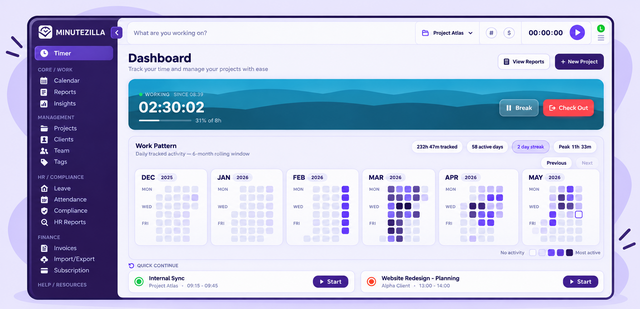
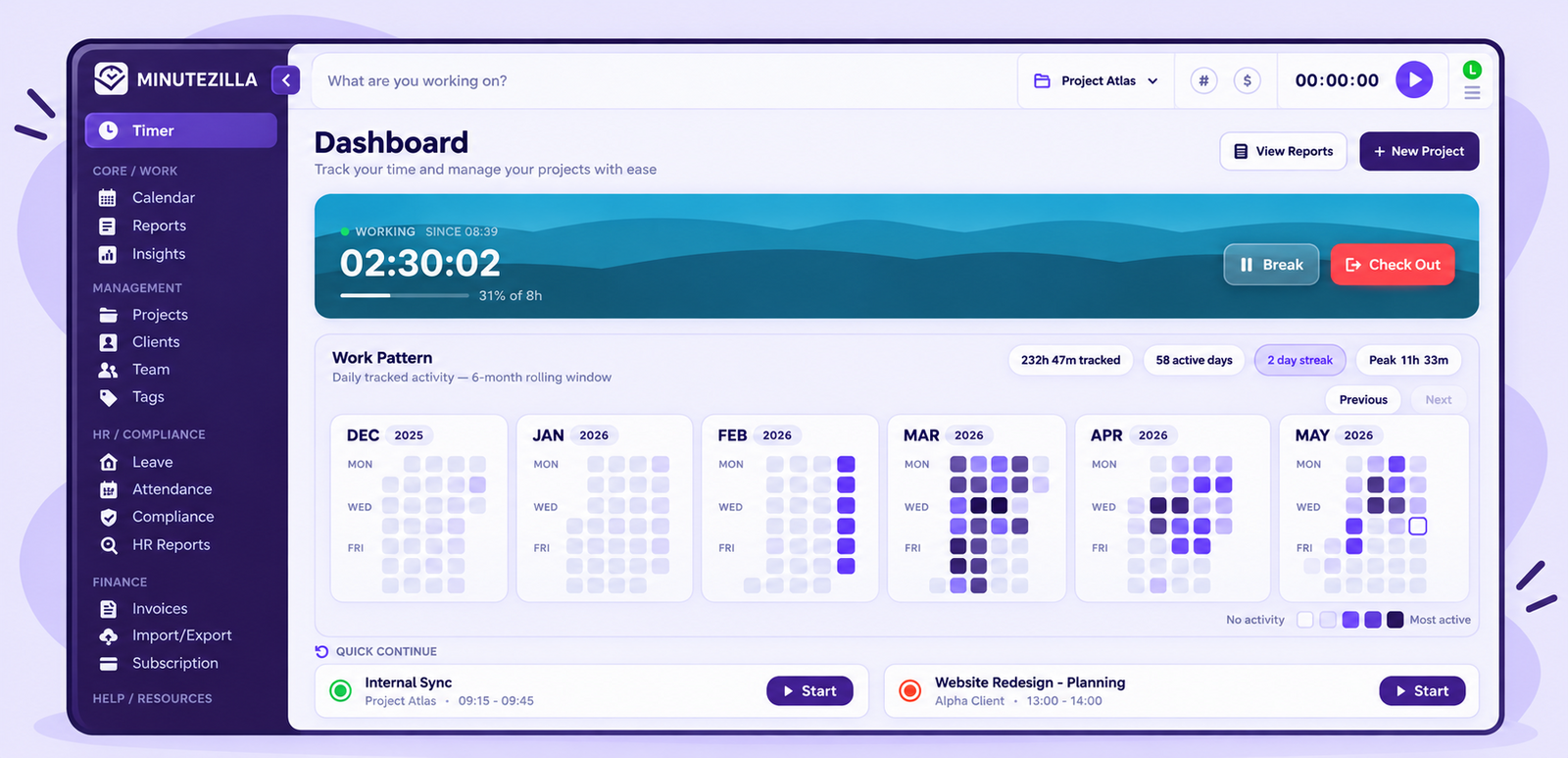
Modern time tracking platforms built for Germany, such as Minutezilla, are designed to capture only legally required data, without intrusive monitoring.
What Data Is Collected (and What Is Not)
Collected:
- Employee identity (name, user ID)
- Project, task, or client assignment
- Check-in/out times or time intervals
- Total hours worked
- Optional: breaks, absences, overtime
Not Collected:
- Screen content (no screenshots or video)
- Keystrokes or mouse movement
- Application usage details (unless explicitly configured)
- Webcam or microphone data
How Employees Record Time
There are several privacy-preserving methods for time tracking:
- Manual Clock-In/Clock-Out: Employees log their start, end, and break times (via web, app, or physical terminal).
- Timesheets: Employees enter work periods retrospectively for each day or week.
- Mobile Apps: For field staff, location-based check-ins (without tracking activity on devices).
- Integration with Project Management Tools: Employees log time directly within the tools they use for work, without extra surveillance.
No Surveillance — Just Accurate, Auditable Records
With the right tools, time tracking without screenshots is just as accurate and more legally robust. Audit logs, approval workflows, and flexible reporting ensure transparency for both employers and employees.
Try Minutezilla for free
Time tracking, attendance, breaks and leave in one tool. Right in the browser, no credit card.
Practical Example: Configuring Minutezilla for German Compliance
Minutezilla is designed with German privacy needs in mind. Here’s how you can set up Minutezilla for compliance and employee confidence:
- Disable Screenshot and Activity Monitoring: By default, Minutezilla does not capture screen content or keystrokes.
- Configure Required Data Fields: Collect only what’s necessary—names, timestamps, project/task info.
- Set Up Clear Privacy Policies: Use built-in policy templates to inform employees about data usage.
- Involve the Works Council Early: Share system documentation and demo privacy features.
- Enable Employee Self-Service: Allow employees to view, edit (within limits), and approve their own time records.
- Automate Reporting: Export or schedule reports for payroll, compliance audits, or internal reviews.
- Train Your Team: Provide onboarding resources focused on privacy-first time tracking.
For a step-by-step guide, see our HowTo: Setting Up GDPR-Compliant Time Tracking.
Table: Features Comparison — With vs. Without Screenshots
| Feature | Time Tracking Without Screenshots (e.g., Minutezilla) | Time Tracking With Screenshots |
|---|---|---|
| Employee Trust | High | Often Low |
| Legal Risk in Germany | Low | High (needs explicit consent, works council approval) |
| Data Protection Complexity | Low (minimal data) | High (sensitive personal data) |
| Works Council Acceptance | Easy | Challenging |
| Productivity Insights | Based on time/project/task | Based on activity/screen data |
| Privacy Concerns | Minimal | Major |
| Implementation Time | Fast | Slower (due to negotiations) |
| Suitable for Remote Teams | Yes | Often resisted |
| Storage/IT Overhead | Low | High (images/videos stored) |
Best Practices for Privacy-First Time Tracking
Implementing time tracking without screenshots is about more than just software configuration. It’s a holistic approach that combines technology, policy, and communication.
1. Collect the Minimum Data Required
- Focus on start, end, and break times.
- Avoid collecting application logs, screenshots, or background activity unless strictly necessary.
2. Maintain Transparent Communication
- Explain the purpose of time tracking clearly to all employees.
- Provide documentation on what is and isn’t being recorded.
3. Respect Employee Consent
- Even for basic time tracking, inform employees and, where appropriate, obtain written consent.
- For any monitoring beyond the minimum, additional steps are needed (consult the works council).
4. Involve the Works Council (Betriebsrat) Early
- Present the chosen system, privacy safeguards, and intended data use.
- Address concerns proactively and document agreements.
5. Regularly Audit and Review Your Process
- Schedule periodic checks on your time tracking system and policies.
- Update documentation as laws and workplace practices evolve.
FAQ: Time Tracking Without Screenshots in Germany
Is time tracking without screenshots legal in Germany?
Yes. In fact, German law requires working time to be recorded but does not require — and often discourages — invasive monitoring like screenshots. Recording only necessary data is best practice.
Can I be compliant with the Arbeitszeiterfassung regulations using a system without screenshots?
Absolutely. All that’s legally required is accurate start, end, and duration records. See our Arbeitszeiterfassung guide for details.
How do I get my works council (Betriebsrat) to approve a new time tracking tool?
Choose a solution that respects privacy by design, avoids screenshots, and provides clear documentation. Engage your works council early and incorporate their feedback.
What if my employees work remotely or flexibly — do I need screenshots to verify activity?
No. Respecting trust and autonomy is vital. Use project/task logging, manual check-ins, and periodic results reviews instead of surveillance.
How can I demonstrate compliance during an audit?
Use software like Minutezilla, which provides exportable records, audit trails, and clear reports. Document your processes and keep your privacy and data protection policies up to date.
For more in-depth answers, see our privacy-focused time tracking resource center.
Conclusion: The Future is Trust-Based Time Tracking
Time tracking without screenshots is more than a technical configuration — it's a philosophy that aligns with German legal requirements and cultural expectations. By focusing on transparency, trust, and data minimization, companies can meet their obligations without sacrificing employee privacy or morale.
German businesses that adopt privacy-first solutions like Minutezilla are not only reducing legal risk, but also building healthier, more sustainable work environments — and enhancing their attractiveness in a competitive talent market.
Get Started With Minutezilla
Ready to switch to privacy-compliant, screenshot-free time tracking?
Minutezilla offers German businesses a robust, flexible platform that’s designed for compliance, trust, and ease of use.
- Explore our German time tracking features
- Compare Minutezilla to other solutions
- See our pricing
- Learn how Minutezilla supports teams of all sizes
Start your free trial today and experience time tracking without screenshots — the German way.
Further reading: